 An official website of the United States government
 Healthy Relationships Toolkit - Empowering Teens to Build Safe & Supportive Relationships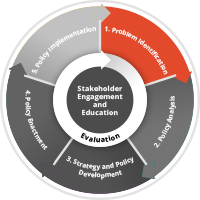
PROBLEM IDENTIFICATION
This section provides guidance for defining the issue of TDV in your community and analyzing current policy efforts.
It is helpful to define the problem with a high level of specificity. For example, if the data indicates that TDV is an issue in your community, ask yourself why. There are a number of risk factors for unhealthy relationships, including drug and alcohol use, having multiple sex partners, lack of parental supervision and support, and witnessing violence at home. By examining the root causes of the problem, you can develop clear goals and identify appropriate policy strategies.
UNDERSTAND TDV IN YOUR COMMUNITY
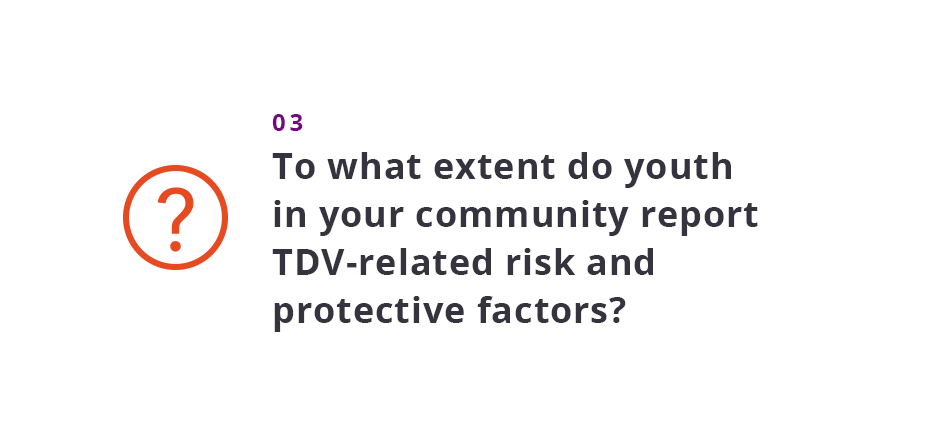
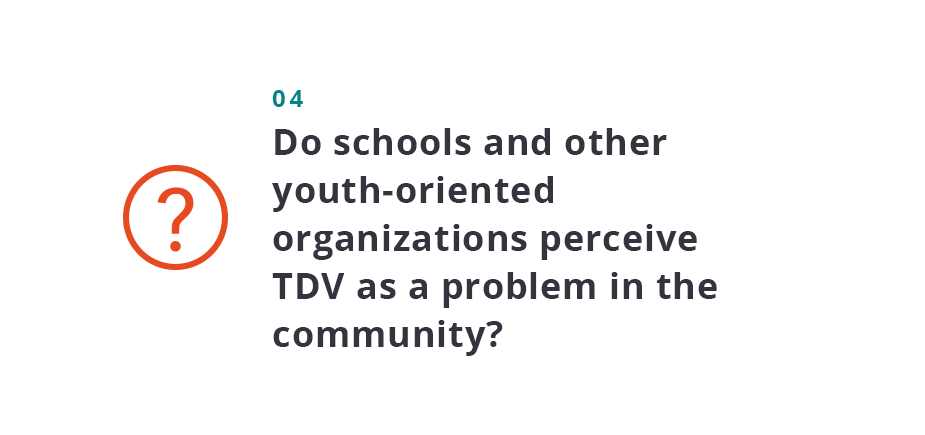
Understanding the problem of TDV in your community is an important first step. Quantitative and qualitative data will provide the rationale and foundation for your efforts. Once you have collected, summarized, and interpreted data on TDV and its indicators you can begin to think about how best to clarify and frame the issue, define policy goals, identify policy strategies, monitor progress, and evaluate the results of your efforts.[1] Use the Key Questions for Problem Identification to help define the problem of TDV.
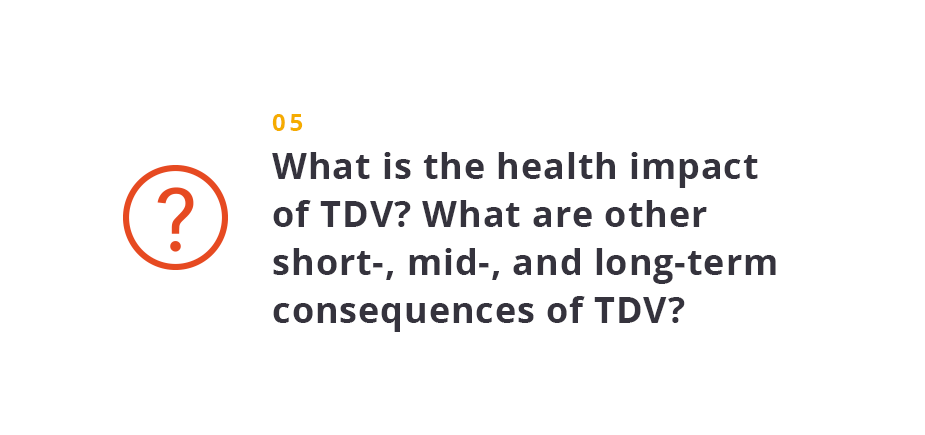
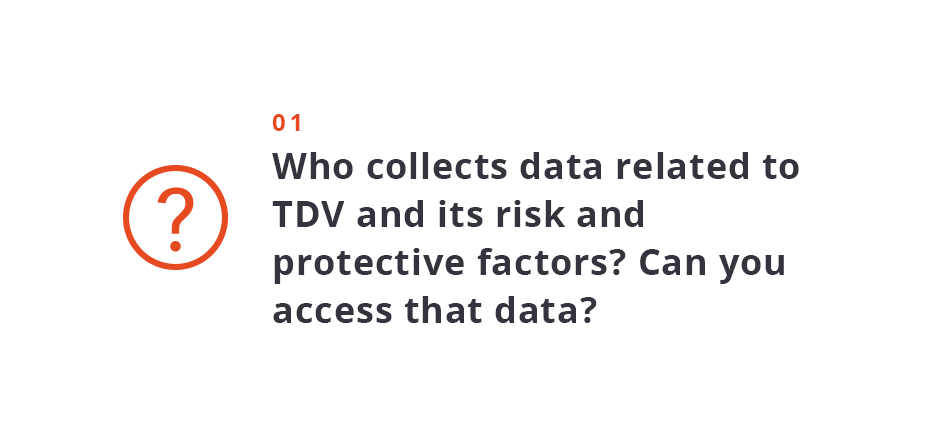
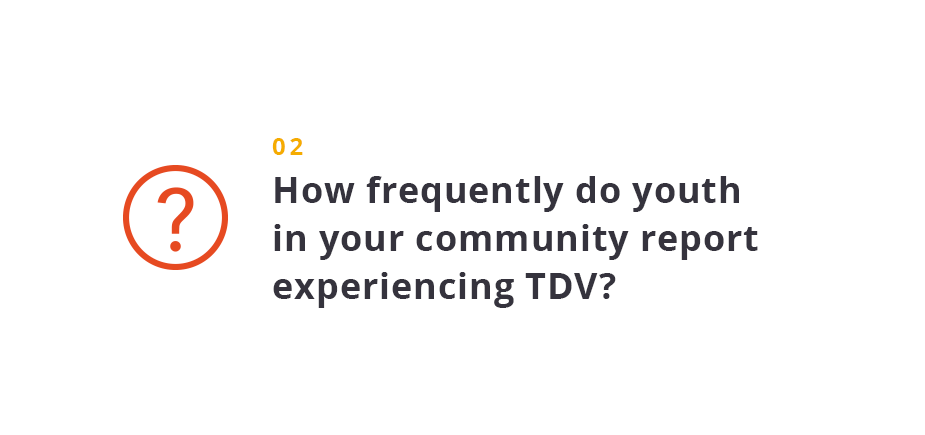
Download Printable PDF of Slider Questions
There are a number of ways your local health department can work with a community advisory board and other partners to increase understanding and awareness of healthy relationships and TDV in your community:

Collect, analyze, interpret, and summarize data, and other evidence relevant to the burden, severity, and scope of TDV, its consequences, and related protective and risk factors

Summarize the problem of TDV in your community in clear, compelling ways

Identify gaps in community data related to TDV and healthy relationships

Bring together key stakeholders, both internal and external to the Local Health Departments, to inventory local efforts to reduce TDV and encourage healthy relationships

Conduct interviews and focus groups with teens, parents, educators, healthcare providers, and other individuals engaged with youth to better understand their perspectives of healthy relationships and TDV
This Guide and website are provided for informational purposes only. Note that certain restrictions apply to the use of CDC funds for impermissible lobbying. For more information concerning such restrictions see the CDC Anti-Lobbying Guidelines.